Be yourself; Everyone else is already taken.
— Oscar Wilde.
This is the first post on my new blog. I’m just getting this new blog going, so stay tuned for more. Subscribe below to get notified when I post new updates.
Be yourself; Everyone else is already taken.
— Oscar Wilde.
This is the first post on my new blog. I’m just getting this new blog going, so stay tuned for more. Subscribe below to get notified when I post new updates.
The Amazon rainforest is the world’s largest intact forest. It’s home to more than 24 million people in Brazil alone, including hundreds of thousands of Indigenous Peoples belonging to 180 different groups. The region is home to 10 percent of all plant and animal species known on Earth. There are approximately 40,000 species of plants and more than 400 mammals. Birds add almost 1,300, and the insects reach millions. The Amazon Basin stores approximately 100 billion metric tons of carbon, more than ten times the annual global emissions from fossil fuels.
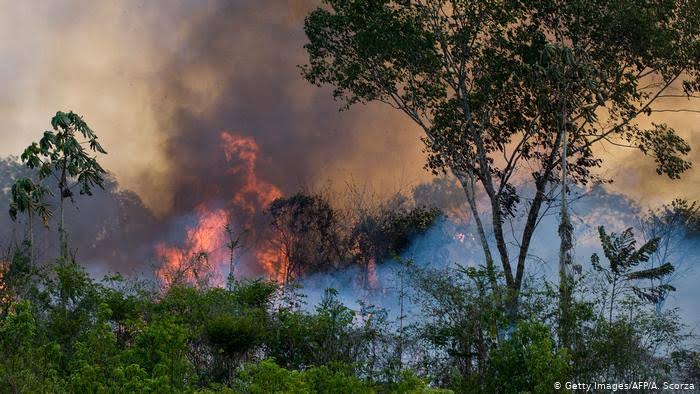
Currently, the Amazon is a carbon sink, meaning it stores carbon dioxide and prevents it from entering the atmosphere and fueling climate change. Deforestation, on the other hand, releases that carbon into the air, making global warming worse. Because of this, deforestation accounts for about 10 to 15 percent of global greenhouse gas emissions. Losing the Amazon means more carbon emissions and a warmer world.
No matter how far from the region you live, the Amazon plays an important role in all of our lives, and we all play a role in protecting the homes of thousands of people and some of the world’s rarest wildlife. (https://www.greenpeace.org/usa/forests/amazon-rainforest/)
In the past three decades, clearing and degradation of the state’s forests have been rapid: 4,200 square kilometers cleared by 1978; 30,000 by 1988; and 53,300 by 1998. By 2003, an estimated 67,764 square kilometers of rainforest—an area larger than the state of West Virginia—had been cleared. Legal and illegal roads penetrate a remote part of the forest, and small farmers migrate to the area. They claim land along the road and clear some of it for crops. Within a few years, heavy rains and erosion deplete the soil, and crop yields fall. Farmers then convert the degraded land to cattle pasture, and clear more forest for crops. Eventually the small land holders, having cleared much of their land, sell it or abandon it to large cattle holders, who consolidate the plots into large areas of pasture. All major tropical forests—including those in the Americas, Africa, Southeast Asia, and Indonesia—are disappearing, mostly to make way for human food production, including livestock and crops. Although tropical deforestation meets some human needs, it also has profound, sometimes devastating, consequences, including social conflict and human rights abuses, extinction of plants and animals, and climate change—challenges that affect the whole world. (https://earthobservatory.nasa.gov/world-of-change/Deforestation ) Today the Amazon rainforest is burning record numbers of fires this year, and now smoke from the expansive flames has been captured on both NASA and NOAA satellites from space. According to the National Institute for Space Research (INPE) satellite data showed an 83 percent increase compared to the same period in 2018. The space agency reports its satellite data has detected more than 72,000 fires since January 2019.
The heavy smoke caused a daytime blackout more than 1,700 miles away in Brazil’s largest city São Paulo on Monday.
Josélia Pegorim, Climatempo meteorologist, told Globo: “The smoke did not come from fires from the state of São Paulo, but from very dense and wide fires that have been going on for several days in Rondônia and Bolivia.
“The cold front changed the direction of the winds and transported this smoke to São Paulo.”
The smoke resulting from some of these wildfires was also captured in satellite images released by NASA. (https://www.express.co.uk/news/world/1168299/amazon-rainforest-fire-how-did-amazon-fires-start-cause-deforestation-how-long-fire/amp )
Deforestation costs $4.5 trillion each year through the loss of biodiversity. For example, half of all pharmaceuticals comes from genetic resources.
Deforestation has eliminated habitat for millions of species. In fact, 80% of Earth’s land animals and plants live in forests.
Long-term, it worsens climate change. The tree canopy keeps the forest soils moist and more resistant to wildfires, droughts, and subsequent floods. The canopy also blocks the sun’s rays during the day and holds in heat at night. Without it, the environment gets hotter during the day.
Everytime someone mentioned cancer in late 90s or early 2000s you could pull a chair and sit to listen to the story as it sounded far fetched and almost a disease for the rich if you grew up in a minimum wage family. Today you know atleast 3 people who passed on or are ailing from the disease. What went wrong or what befell us?
Some mythical beings still believe is a curse, but looks like everyone around us is cursed then, we might not debunk the curse part but I am here to break it down to everyone to understand what’s wrong and where we are headed to.
A Kenyan perspective.
In the recent weeks, as a nation we have lost 3 prominent persons (Bob Collymore; Safaricom CEO, Hon Ken Okoth; Member of Parliament for Kibera Constituency and Dr Joyce Laboso) all of whom were fighting different types of cancers. Being prominent persons in our society means they could fly out and get the best healthcare they could outside of our borders. What of the man at the bottom of a political food chain? Kenya loses around 90 people daily to cancel related ailments https://sokodirectory.com/2019/02/kenya-loses-90-people-daily-to-cancer-lifestyle-largely-to-blame/
We have not been able to plan as a nation on how to reduce these deaths because whenever policies are made and implemented, the stakeholders at the lowest level of our healthcare system are never included in the discussion yet they are a strong pillar if we need to combat or at least reduce this menace.
As I was coming from work with an oncologist friend of mine, we were brainstorming on this question. Then he came up with a suggestion.
“There’s need for policymakers to involve us on the ground.” He continued,”if the government could invest in giving scholarships or sponsorship or rather employ oncologists at the lowest level of our healthcare system and equip the laboratories with most basic of the bloodwork machines (hemogram), there could be around 60% of chances that early diagnosis could be made and management started immediately which could eventually be beneficial to the patient since most cancers are non lethal if discovered early enough. Then keep refreshing and training other health care givers on the same.” The main reason we are where we are is because of a government that lost touch with the reality because of either wrong advisers or just ignorance. They start politiking a week after general elections till the next election which happens 5 years later. The systems are so weak that the quality control body allows anything for import without quality assessment because of cartels that bring in killer consumable commodities, substandard medicines etc.
Until we start speaking about the issues and making efforts to change the status quo, we shall all continue becoming slaves of preventable or curable diseass and bad healthcare system.
As scientists find the cure, I hope those companies that make and sell chemotherapy drugs won’t buy those scientists nor burn the research. There’s should be also affordable selective chemotherapy procedures because as long as we continue using non-selective chemotherapy drugs, we will keep losing our loved ones faster than they could have stayed without the the chemo.
This is an example post, originally published as part of Blogging University. Enroll in one of our ten programs, and start your blog right.
You’re going to publish a post today. Don’t worry about how your blog looks. Don’t worry if you haven’t given it a name yet, or you’re feeling overwhelmed. Just click the “New Post” button, and tell us why you’re here.
Why do this?
The post can be short or long, a personal intro to your life or a bloggy mission statement, a manifesto for the future or a simple outline of your the types of things you hope to publish.
To help you get started, here are a few questions:
You’re not locked into any of this; one of the wonderful things about blogs is how they constantly evolve as we learn, grow, and interact with one another — but it’s good to know where and why you started, and articulating your goals may just give you a few other post ideas.
Can’t think how to get started? Just write the first thing that pops into your head. Anne Lamott, author of a book on writing we love, says that you need to give yourself permission to write a “crappy first draft”. Anne makes a great point — just start writing, and worry about editing it later.
When you’re ready to publish, give your post three to five tags that describe your blog’s focus — writing, photography, fiction, parenting, food, cars, movies, sports, whatever. These tags will help others who care about your topics find you in the Reader. Make sure one of the tags is “zerotohero,” so other new bloggers can find you, too.

 KarajaMJ Speaks